
How to Play League of Legends: A Complete Beginner’s Guide
League of Legends is a team-based strategy game with distinct roles, modes, rankings, and vocabulary. This independent beginner's reference explains matches, the map, player positions, modes, and competitive ranks. It is a fan-made educational guide, not affiliated with or endorsed by Riot Games.
Match
How a League of Legends Match Works
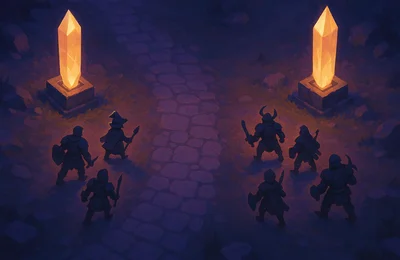
League of Legends (LoL) is a free-to-play multiplayer online battle arena game. Two teams of five control champions and try to destroy the opposing Nexus. Champions earn gold by defeating minions, monsters, and enemies, spend it on items, and gain experience to improve abilities.
A Summoner's Rift match often lasts 25 to 40 minutes. The early game focuses on resources and lane control. During the mid game, players move around the map, contest objectives, and fight together. Late-game encounters involve stronger champions and decisive team fights. These phases are informal, not fixed timers. Teams must also manage defensive structures and minion waves: champion kills alone cannot win a match, even when one side has a substantial lead. Coordination remains important throughout.
Rift Map
The Summoner's Rift Map
Summoner's Rift has three lanes and jungle territory. A diagonal river connects major neutral objectives.
Lanes, Jungle, and the River
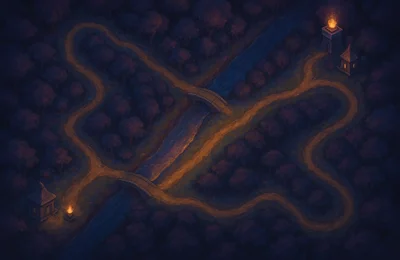
Top lane runs along the upper edge, mid lane crosses the center, and bottom lane follows the lower edge. Each lane carries waves of computer-controlled minions toward the enemy base. Jungle camps provide alternative sources of gold and experience, while pathways let players travel between lanes. The river contains entrances to major monster pits, making it an important area for movement and vision. Teams frequently contest these routes to understand where opponents might appear.
Epic Monsters and Defensive Structures
Dragons provide teamwide benefits, while Void Grubs help teams damage structures. Rift Herald can be summoned to attack turrets, and Baron Nashor grants a powerful temporary advantage that strengthens nearby allied minions. These objectives appear at different stages of standard Summoner's Rift matches; some are absent from faster variants such as Swiftplay. To reach the enemy Nexus, players push past turrets and inhibitors. Destroying an inhibitor temporarily creates stronger super minions. The match ends when a team's Nexus is destroyed.
Five Roles
The Five League of Legends Roles Explained
Teams assign one player each to top, jungle, and mid, plus two to bottom lane. Responsibilities become more flexible during team fights.
| Role | Location | Main Responsibility |
|---|---|---|
| Top | Top lane | Solo-lane pressure and frontline or dueling duties |
| Jungle | Between lanes | Monster camps, lane assistance, objective control |
| Mid | Middle lane | Central control, damage, and roaming |
| ADC (Bot) | Bottom lane | Consistent damage and gold farming |
| Support | Bottom lane | Vision, protection, and setting up fights |
Top and mid players begin in solo lanes. Top champions may absorb damage or pressure a side lane, while mid champions frequently assist nearby fights. Junglers clear camps, perform surprise attacks called ganks, and coordinate neutral objectives. Their routes change as matches develop.
The ADC, meaning attack damage carry, gathers gold to become a consistent damage source. Supports protect teammates, disrupt enemies, and place vision wards. Later, bot-lane partners join larger fights. Roles describe patterns rather than fixed champion types or movement rules.

Game Modes
League of Legends Game Modes
Modes differ in team size, pace, and objectives. Normal Draft and Ranked use Summoner's Rift, while other formats change the rules.
| Mode | Map and Teams | Typical Match |
|---|---|---|
| Normal Draft | Summoner's Rift, 5v5 | 25-40 minutes |
| Ranked | Summoner's Rift, 5v5 | 25-40 minutes |
| ARAM | Single-lane maps, 5v5 | 15-25 minutes |
| Arena | Small arenas, normally eight pairs | 15-30 minutes |
| Limited-time modes | Varies by event | Varies |
Normal Draft includes champion picks and bans without ranked progression. Ranked records competitive results. ARAM randomizes champions and concentrates action in one lane. Arena features combat rounds, upgrades, and elimination; special events can change its format. Rotating modes introduce temporary maps and mechanics. Match durations are estimates. Some queues unlock only after players reach certain account levels, and limited-time events can disappear or return after updates.
Ranked
How Ranked Works in Season 2026
Ranked places players on a competitive ladder. Solo/Duo and Flex maintain separate visible ranks.
Tiers, Divisions, LP, and MMR
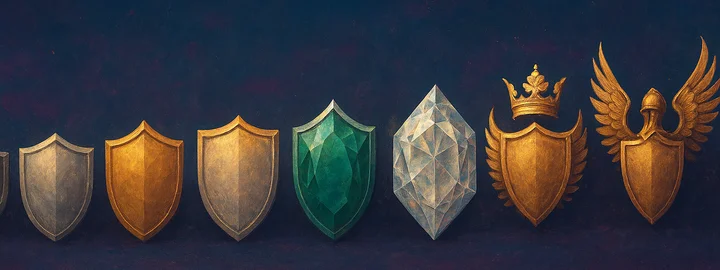
The tiers, in ascending order, are Iron, Bronze, Silver, Gold, Platinum, Emerald, Diamond, Master, Grandmaster, and Challenger. Iron through Diamond have divisions IV, III, II, and I; the highest three tiers do not. Winning ranked matches generally earns League Points (LP), while losses cost LP. Hidden matchmaking rating (MMR) estimates skill and helps determine opponents. Because LP and MMR measure different things, players with similar visible ranks can receive different LP changes after matches.
Placements, Promotions, and Resets
At the start of the 2026 ranked year, players completed five placement matches to establish an initial rank. Reaching the appropriate LP threshold can produce promotion without a separate promotion series; sustained losses can cause demotion, subject to protections. Some high-ranked players also face inactivity decay. Ranked progress resets at the annual transition, but seasonal changes within 2026 have not always reset everyone. For example, Season 2 brought special adjustments for certain high-ranked regions. These rules may change in future updates.
Terms
Common League of Legends Terms
This alphabetical glossary defines common actions, resources, and tactics.
- ADC: A carry position generally focused on sustained damage.
- AFK: Away from keyboard; an inactive player.
- All-in: Committing strongly to a fight.
- AoE: Area of effect; an ability affecting multiple targets.
- Buff: A beneficial temporary effect.
- CC: Crowd control that restricts movement or actions.
- CS: Creep score; counted minion and monster kills.
- Dive: Attacking an opponent under their turret.
- Farm: Collecting gold and experience from units.
- Gank: A surprise attack, often from the jungle.
- Invade: Entering the enemy jungle.
- Kite: Attacking while moving to maintain distance.
- Last-hit: Delivering a minion's final damaging blow.
- Macro: Decisions about the wider map and objectives.
- Minion: A computer-controlled lane unit.
- Objective: A valuable target such as Dragon or a turret.
- Peel: Protecting allies from approaching opponents.
- Poke: Damaging opponents from relative safety.
- Recall: Channeling a return to base.
- Roam: Moving from a lane to assist elsewhere.
- Scaling: Growing stronger through levels or items.
- Snowball: Turning an advantage into greater strength.
- Split-push: Pressuring a lane away from teammates.
- Vision: Information provided by wards and other effects.
- Wave: A group of lane minions.
Questions
Frequently Asked Questions
Is League of Legends Free?
Yes. Downloads and gameplay are free, with optional cosmetic purchases. Champions can be unlocked through gameplay.
How Long Does a Match Last?
Standard matches often last 25 to 40 minutes. ARAM and Arena are frequently shorter.
When Does Ranked Unlock?
An account must reach level 30, own at least 20 champions, and complete 10 Swiftplay or Normal Draft matches under the 2026 requirements.
Which Roles Are Beginner-Friendly?
Top often starts with one opponent; support has less emphasis on minion farming. Neither is universally easier.
Can Players Leave Assigned Lanes?
Yes. Roles describe starting responsibilities, not boundaries. Players roam and group around objectives.
Main Points
The Main Points to Remember
League of Legends combines champions, lanes, defensive structures, and team objectives. Five roles describe typical responsibilities, while game modes change how matches unfold. Ranked adds tiers, LP, and matchmaking. The map, match phases, and vocabulary together explain the game's essential structure.